

Why humanity's next chapter may depend on building infrastructure that values people as much as profit.
Something feels different these days.
Not in the dramatic, science fiction sort of way where robots suddenly appear on every street corner and announce the end of an era. The change we're experiencing is quieter than that. It arrives through software updates. Through job descriptions that didn't exist five years ago. Through artificial intelligence tools that seem to get smarter every week. Through the growing feeling that the world is moving faster than our ability to understand where it's headed.
You can see it almost everywhere. Students are questioning whether the degrees they're pursuing today will still be relevant tomorrow. Workers are wondering how automation will reshape their careers. Communities are struggling with rising costs of living while technology becomes increasingly powerful and, in many cases, increasingly affordable. At the same time, information floods our screens at a pace that makes it difficult to separate truth from noise.
If you've felt uncertain about what all of this means, you're not alone
.
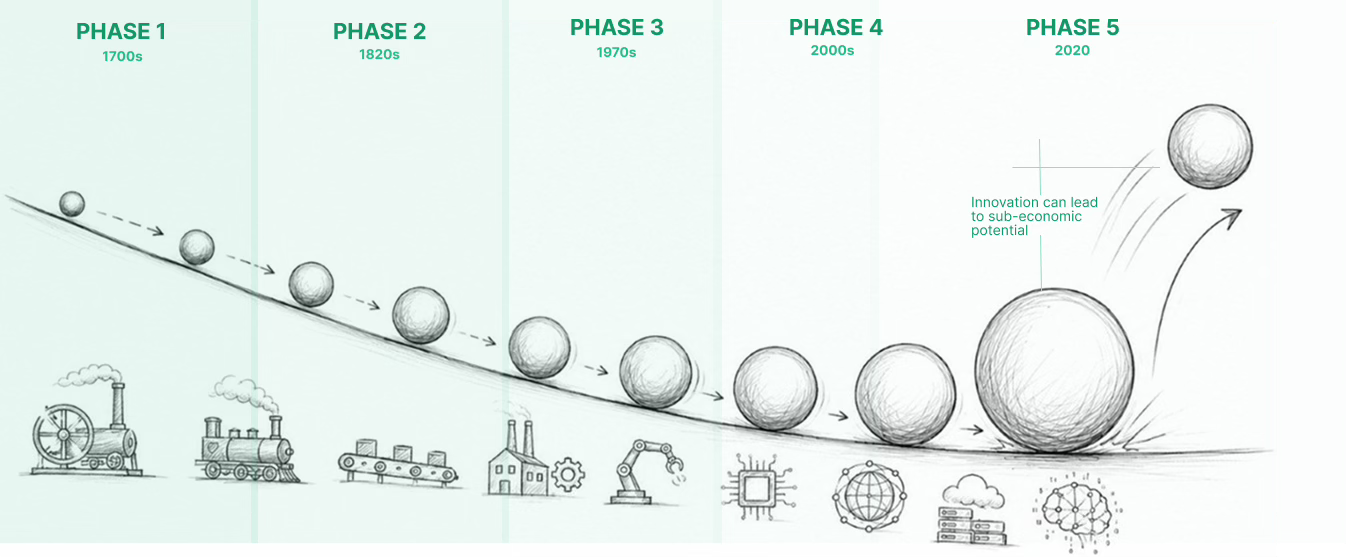
The challenge isn't simply that technology is changing the world. Humanity has always innovated. We built roads, electrical grids, libraries, factories, computers, and eventually the internet itself. Change has always been part of our story. The challenge today is that the speed of innovation continues to increase, to outpace many of the systems designed to help people adapt to it.
When everything seems important, it's difficult to know what actually deserves our attention.
That is one of the reasons The Quantum Economist exists. Not to predict a dystopian future. Not to tell you that technology is inherently good or inherently bad. But to help make sense of the forces shaping our future and explore the ideas that could help humanity navigate them responsibly.
One of those ideas begins with a question that world leaders asked more than a decade ago: What does meaningful progress actually look like?
For much of modern history, progress has been measured primarily through economic growth. Nations celebrated rising GDP. Companies celebrated increasing profits. Investors celebrated expanding markets. Those measures certainly matter. Economic growth has lifted billions of people out of poverty and enabled extraordinary advances in medicine, science, communication, and infrastructure.
But over time, many people began noticing a gap.
Economic growth could tell us how much value was being created. It could not always tell us whether communities were actually thriving.
A city might experience significant investment while affordable housing became harder to find. A company might report record profits while workers struggled to keep up with rising costs. A nation might grow wealthier while inequality widened between neighborhoods.
In response to these challenges, the United Nations introduced the Sustainable Development Goals, commonly known as the SDGs.
The SDGs represented something ambitious. For perhaps the first time at a global scale, humanity attempted to create a shared framework for social impact. The goals focused on issues such as poverty reduction, quality education, good health, sustainable communities, economic opportunity, environmental stewardship, and social inclusion.
Think of the SDGs as humanity's first attempt to create a common blueprint for a better future.
Governments adopted them. Nonprofits aligned with them. Corporations referenced them in sustainability reports. Investors began paying attention to environmental and social outcomes alongside financial performance.
The SDGs helped change the conversation.
They reminded us that success should not be measured solely by how much wealth is created, but also by how effectively that wealth contributes to human well-being.
Yet even the most inspiring blueprint has limitations.
A blueprint tells you what to build. It does not build the structure for you.
And that is where one of the biggest challenges emerged.
While the SDGs provided a powerful vision, the economic infrastructure responsible for driving development had been built around a very different set of incentives. For decades, many institutions operated under the belief that their primary responsibility was maximizing financial performance.
Some economists trace this mindset back to an idea known as the Friedman Doctrine.
Named after economist Milton Friedman, the doctrine argued that the primary social responsibility of a business is to increase profits for its shareholders while following the rules of society.
At first glance, that may seem perfectly reasonable.
After all, businesses exist to create value. They employ people, develop products, and generate economic activity. The doctrine helped shape an era of remarkable economic expansion.
But imagine a town with a single large factory.
The factory continues growing year after year. Profits increase. Investors are pleased. Quarterly reports look excellent.
Meanwhile, the local school struggles with funding. Housing becomes less affordable. Public services begin to deteriorate. Workers find themselves working harder simply to maintain the same quality of life they once enjoyed.
From a purely financial perspective, the factory is succeeding.
From a community perspective, the picture becomes more complicated.
That tension sits at the heart of many conversations about the future of economic development.
The challenge isn't that economic growth is unimportant.
The challenge is that economic growth alone cannot fully measure whether human beings are flourishing.
Today, that challenge is becoming even more pronounced because humanity faces a second disruption happening at the same time.
Technology itself is reshaping the foundations of the economy.
Artificial intelligence can now perform tasks that once required years of specialized training. Automation continues transforming industries. Software can replicate certain forms of labor at costs that would have seemed impossible only a decade ago.
At the same time, many educational systems struggle to adapt quickly enough. Students spend years preparing for careers that may change dramatically before they enter the workforce. Entire professions are being redefined. Information travels faster than ever, yet misinformation and disinformation spread alongside it.
The result is a growing concern among economists, educators, technologists, and civic leaders.
What happens if technological innovation advances faster than humanity's ability to participate in the economy it creates?
What happens if people become increasingly disconnected from the value generated by systems that depend upon their data, attention, creativity, and labor?
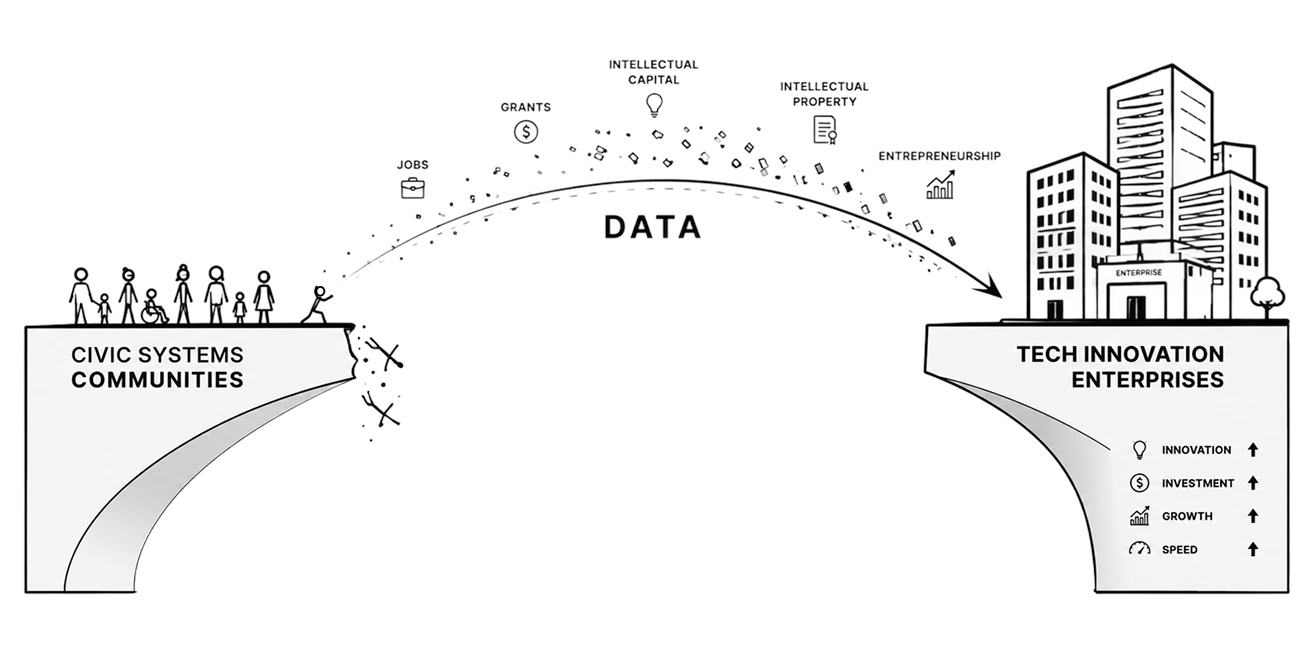
These are not abstract questions. They are questions about the future of work.
The future of education.
The future of communities.
The future of human participation itself.
And it is precisely these questions that led to the development of a new proposal known as the New Economics for Sustainable Development, or NESD.
If the SDGs represented a vision for humanity's future, the NESD represents an attempt to design the infrastructure needed to support that vision.
The idea begins with a simple observation. We have spent decades building infrastructure designed to optimize economic performance. Perhaps the next chapter of development requires infrastructure designed to optimize both economic and social outcomes simultaneously.
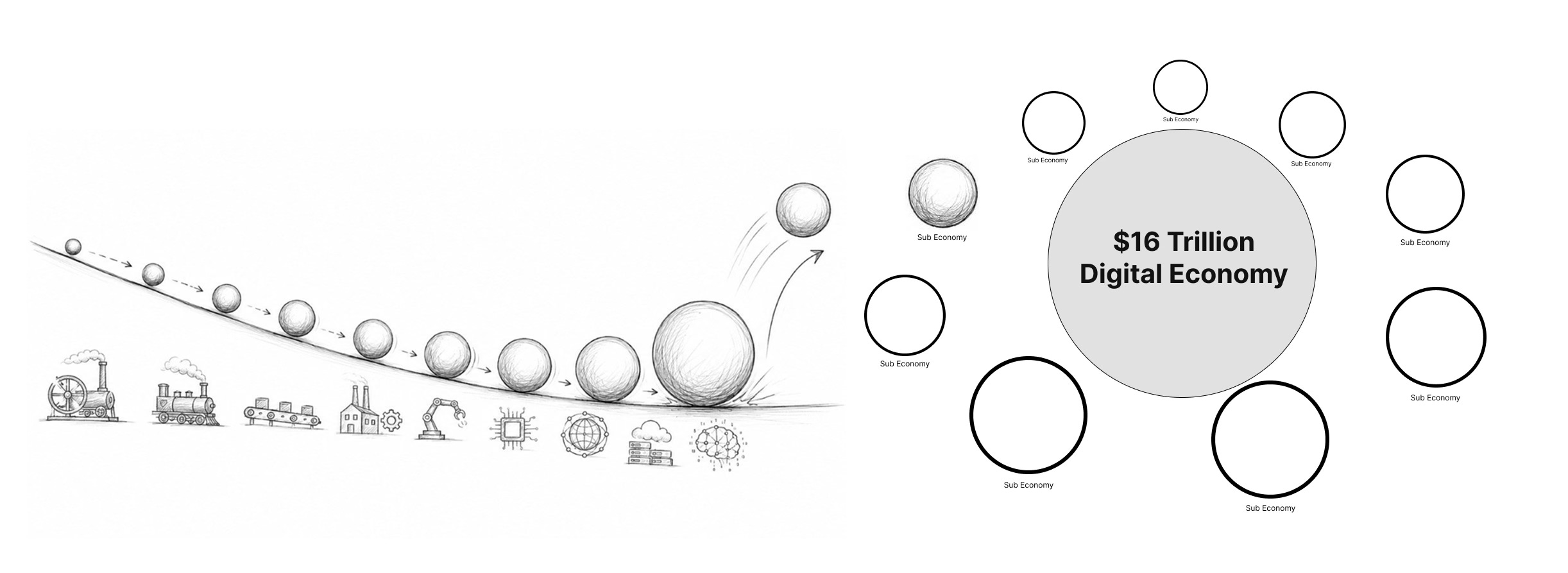
The NESD proposes identifying eight future-proof sub-economies that can serve as foundations for a more resilient future. These sub-economies are not intended to replace existing markets or dismantle private enterprise. They are designed to strengthen them by ensuring that economic progress remains connected to human well-being.
Think of it like city planning. When engineers build a city, they don't begin with skyscrapers. They begin with roads, utilities, transportation systems, and public infrastructure. These foundational systems determine how effectively the city functions for decades to come.
The NESD applies similar thinking to the economy itself.
Rather than assuming technological progress will naturally benefit everyone, it asks a different question:
What kind of infrastructure should exist if our goal is to ensure humanity remains an active participant in the future rather than a passive observer of it?
Within the NESD framework, economic success and social success are not competing priorities. They become interconnected measures of long-term sustainability.
Communities matter.
Businesses matter.
Innovation matters.
Human dignity matters.
The goal is not to choose one over the other. The goal is to build systems capable of supporting all of them simultaneously.
Perhaps most importantly, the NESD transforms the Sustainable Development Goals from aspirations into building blocks.
Inside these proposed economic environments, the SDGs are no longer distant ideals that communities hope to achieve someday. They become practical design principles embedded into the infrastructure itself.
Economic development gains a social dimension. Social impact gains an economic foundation. Communities gain a mechanism for contributing to and benefiting from the progress occurring around them.
Whether the NESD ultimately succeeds will depend on many factors. New ideas always face scrutiny. They should. The future deserves careful thinking. But the questions behind the NESD are worth asking.
As artificial intelligence continues advancing and technology becomes increasingly woven into every aspect of daily life, humanity faces a choice. We can continue measuring success primarily through systems designed for a different era. Or we can begin building new infrastructure capable of supporting the realities of the one emerging around us.
The future has not been written yet.
Despite what headlines sometimes suggest, humanity's story is not approaching its final chapter.
If anything, we're standing at the beginning of a new one.
And like every great story, what happens next depends on the choices we make together.